Showing posts with label blood. Show all posts

Monday, December 9, 2013

Blood vessels reorganise after face transplants

Blood vessels in face transplant recipients re-organise themselves, leading to an understanding of the biologic changes that happen after full face transplantation.


Blood vessels reorganise after face transplantsBlood vessels in face transplant recipients re-organise themselves, researchers have found, leading to an understanding of the biologic changes that happen after full face transplantation.


The results of the study have been presented at the annual meeting of the Radiological Society of North America .

Face transplantation is a recent development in reconstructive surgery for patients who have lost some or all of their face from injury or disease. The first full face transplantation in the US was carried out at Brigham and Women's Hospital in Boston in 2011.


As part of the procedure, surgeons connect the patient's major arteries and veins to those from a donor face to ensure healthy circulation in the transplanted tissue. Because the technology is new, not much is known about the vascular changes that help blood penetrate into the transplanted tissue.


Arteries and veins


 The development of new blood vessel networks in transplanted tissue is critical to the success of face transplant surgery.


 "We assumed that the arterial blood supply and venous blood return was simply from the connections of the arteries and the veins at the time of the surgery."
                
 Co-author Dr Frank J Rybicki,  director of the hospital's Applied Imaging Science Laboratory and his fellow researchers used 320-detector row dynamic computed tomography angiography (CTA) to study the facial allografts of patients one year after successful transplantation.


 The CTA technology offers imaging over 16cm of coverage, enabling the researchers to view collateralisation, a process in which the body stimulates existing blood vessels to elongate, widen and form new connections.


Larger vessels


"The key finding of this study is that, after full face transplantation, there is a consistent, extensive vascular reorganisation that works in concert with the larger vessels that are connected at the time of surgery," said another researcher, Dr Kanako K Kumamaru.


"We have found that since the vessels more commonly associated with the back of the head are critical to maintain the vascular reorganisation.”                    
The authors note that the findings could help improve surgical planning and assessment of potential complications in face transplant patients.


View the original article here

Saturday, December 7, 2013

Childhood stress linked to higher blood pressure

A new US study offers more evidence that childhood experience may have health effects that echo into adulthood.


Childhood stress linked to higher blood pressureA new US study offers more evidence that childhood experience may have health effects that echo into adulthood.


Based on health data for 500 unrelated black men over age 20 enrolled in the Howard University Family Study, researchers found those who had lived with one parent rather than two as children had higher average blood pressure readings.


The men who had grown up in single-parent households also had a 46% greater risk of developing high blood pressure, also known as hypertension."These differences in mean blood pressure and the prevalence of hypertension among men raised in two-parent households vs. single-parent households during childhood are quite significant," Debbie Barrington said.


Barrington led the study at the National Institute on Minority Health and Health Disparities with colleagues at the National Institutes of Health in Bethesda, Maryland.


Childhood living arrangements


About 1 in 3 US adults has high blood pressure, according to the Centres for Disease Control and Prevention. High blood pressure increases the risk of heart attack and stroke, which are leading causes of death.


Generally, the lower the maximum blood pressure (the top number), the better, with a reading under 120 millimetres of mercury (mmHg) considered best.


Previous studies have linked childhood living arrangements to aspects of high blood pressure, but this one is the first to examine black men a population at particular risk for hypertension.


Men who had lived with both parents as children tended to have a maximum blood pressure 4.4 mmHg lower than those who had never lived with both parents. The differences in maximum blood pressure between men raised by two parents versus one were greater than the changes produced by some common prescription blood pressure medications, Barrington said.


The men from two-parent households also tended to have a smaller difference between maximum and minimum blood pressure as the heart pumps, and a lower average pressure, all of which are usually for the better.


Single-parent households


The gaps widened further for men who had lived with both parents between ages 1 and 12, averaging 6.5 mmHg lower maximum blood pressure readings than men from single-parent households, according to the results published in the journal Hypertension.


It might not actually be the presence or absence of parents that directly affects blood pressure, but the number of parents in the home could indicate other important childhood risk factors, Barrington said.


Children who grow up in single-parent households are more likely to experience poverty, and early childhood poverty has been linked to later health problems like hypertension, she said.


Among the study participants, "Those men who grew up in two parent households during childhood were also more likely to experience less economic hardship and subsequently less stress in early life," she said.


"Less childhood stress potentially delays the rise of blood pressure that increases with age, lowering one's risk of hypertension in adulthood. "Childhood family living arrangements might, for research purposes, be equivalent to social and economic status, Barrington said, though she did not collect economic data on the men's childhood households.


If that kind of economic background information had been taken into account, she said, the protective effect of having two parents in the home might have been smaller or might have disappeared.


'Hard-wiring' for hypertension


Research has shown that living with two parents improves the social circumstances of black American boys, increasing their academic success and employment prospects and decreasing the likelihood of drug and alcohol abuse, Barrington pointed out.


"There is substantial evidence that changes in family structures can augment environmental stressors and unmask genetic, ethnic and cultural factors in the African-American predilection for hypertension," said Richard Millis, who was not involved in the study.


To begin to translate these results to useful principles in daily life, the medical community should begin by "educating the educators", namely nurses, doctors and health professionals, said Millis, an associate professor of physiology and biophysics at Howard University College of Medicine in Washington, DC. Doctors can then help patients understand how lifestyle choices might reverse "hard-wiring" for hypertension, he said.


One interesting place to start would be to research the "critical period" of childhood between ages 1 and 12, the study authors write. Until the new results are replicated, black Americans should continue to follow Institute of Medicine recommendations for blood pressure screening and decreasing salt, fat and sugar in their diets, Barrington said.


"Our study suggests that there may be a link between childhood family living arrangements and blood pressure in black men," she said. "It does not suggest that those men who did not live with both parents during childhood are destined to have high blood pressure in adulthood."


View the original article here

Monday, November 4, 2013

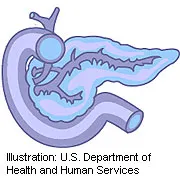
Blood Test for Pancreatic Cancer Shows Promise in Early Trial

But the screen is meant only for people already at high risk for the deadly illness, experts say

 Researchers found a diet rich in fruits,


Pancreatic cancer is one of the most lethal tumor types because it's too often diagnosed in a later, advanced stage. But a new study suggests that a simple blood test might help spot the disease earlier.


The study is described as small and preliminary, and investigators cautioned that the initial findings will need to be confirmed in larger trials.


"Pancreas cancer is the fourth leading cause of cancer death in the United States," said study coauthor Dr. Nita Ahuja, an associate professor of surgery in the department of oncology and urology at the Johns Hopkins University School of Medicine, in Baltimore. "There have been minimal to no improvements in the survival from this disease in the last 40 years. There are over 40,000 people diagnosed every year and about that many deaths."


"One of the main reasons for the lethal nature of this cancer is that most cancers are diagnosed too late once they have spread to other organs," Ahuja said. "Around 8 percent have spread to distant organs such as the liver or lungs, while another 10 percent have locally spread to major blood vessels. However, in the patients where cancer can be detected early and has not spread, a long-term cure is possible with surgical removal of the cancer with the surrounding lymph."


Any means of spotting the cancer early would therefore be crucial, Ahuja added. "We have mammograms to screen for breast cancer and colonoscopies for colon cancer, but we have had nothing to help us screen for pancreatic cancer," she said.


Ahuja said the new study sought to find blood "markers" for pancreatic cancer "in patients who are at increased risk for developing this cancer, such as [those with a] family history or heavy smokers."


Ahuja's team had previously identified mutations in two genes, called BNC1 and ADAMST1, that typically occurred in the presence of pancreatic cancer. Since both mutations are found in 97 percent of early stage pancreatic cancer tissues, the researchers developed tests to search for signs of the mutations in blood samples collected from 42 people already diagnosed with early stage pancreatic cancer.


Reporting in the current online edition of the journal Clinical Cancer Research, Ahuja's team said both genetic markers were found in 81 percent of the tested blood samples, but not in samples taken from patients who either did not have pancreatic cancer or had a history of pancreatitis (an inflamed pancreas).


The researchers said the results are much more impressive than, for example, the prostate-specific antigen (PSA) test used to screen for prostate cancer, which has roughly a 20 percent success rate.


Still, an 81 percent accuracy rate is "far from perfect," Ahuja said. The test also had a false-positive rate of 15 percent, meaning that 15 percent of people who get the test initially will be told they might have pancreatic cancer when that is not the case.


And Ahuja stressed that the test is not designed as a screen for the population as a whole -- only for those already deemed to be at high risk for the disease.


"The eventual goal is to develop a cost-effective test to test patients who are at high risk," she said. "The beauty of this test is that it can be repeated every year as you go for your annual physical."


Dr. Smitha Krishnamurthi is an associate professor of medicine in the division of hematology and oncology with University Hospitals Case Medical Center & Case Western Reserve University School of Medicine, in Cleveland. She applauded the research, saying that "if pancreatic cancer could be detected at an early stage, more patients would be cured."


"This study presents an encouraging step in the right direction," Krishnamurthi said. "The authors have developed a blood test that detected the earliest stage of pancreatic cancer and correctly identified most of the healthy individuals tested. However, this was a very small study. The blood test must be studied in many more patients with early stage pancreatic cancer and healthy individuals to really know if it will be an accurate and reliable screening test for pancreatic cancer."


View the original article here

A Blood Test for Fibromyalgia?

 A new blood test may predict fibromyalgia, a condition that can be hard to diagnose.

blood vial


Research about the new test was presented Sunday at the annual meeting of the American College of Rheumatology in San Diego.


EpicGenetics of Santa Monica, Calif., developed the test, called the FM/a test, says Bruce Gillis, MD, MPH. Gillis is the company’s CEO and an assistant professor of medicine and emergency medicine at the University of Illinois College of Medicine.


"It is objective, very accurate, and definitive," he says.


But the test’s high price tag -- $744 -- may keep its use limited for now, one expert says.


"Due to the cost and my lack of experience with this new test, I would initially use it in patients in whom I suspect as having fibromyalgia but lack some of the classic features, making the diagnosis more difficult," says Scott Zashin. Zashin is a clinical professor of medicine at the University of Texas Southwestern Medical School, Dallas.


Fibromyalgia causes widespread pain, tenderness, and stiffness in the muscles and connective tissues. The cause is not known. Six million people or more in the U.S. may have it, Gillis says. Usually doctors take a medical history and note symptoms. Often, it is a diagnosis made after excluding other diseases.


"The biggest problem is the skepticism that physicians have that don't believe that fibromyalgia is a real medical ailment," Gillis says. Often, he says, they label the patient as being depressed or being a hypochondriac.


"What our test does more than anything else is legitimize the diagnosis," Gillis says.


The test measures proteins in the body that lessen pain. "In patients with fibromyalgia, they cannot produce normal quantities of these proteins," Gillis says.


The test developers compared the blood test results in:


Ninety-three percent of the people who had fibromyalgia were identified correctly with the test, Gillis says, and 89% of those who did not were correctly identified.


Zashin, who is not involved with the company, says additional studies will be helpful. "If results could be verified, I would discuss the test with patients in whom the diagnosis of fibromyalgia is being considered to determine if they wanted to obtain the information provided by the testing,'' he says.


These findings were presented at a medical conference. They should be considered preliminary, as they have not yet undergone the "peer review" process, in which outside experts scrutinize the data prior to publication in a medical journal.


View the original article here

Wednesday, October 2, 2013

Understanding Hypertension


There square measure perpetually two pressures expressed in pressure level ranges, the pulsation and therefore the blood pressure.
Blood pressure ranges square measure sometimes written exploitation the pulsation variety before or on top of the beat variety, for instance 120/80 mmHg.
The blood pressure, that is that the 1st variety shown, the a hundred and twenty within the example on top of, is that the pressure reading because the heart pumps blood out from the ventricle into the veins.
The blood pressure is that the resting pressure, that is between beats once the pressure decreases before future heart pumping action.
Understanding Hypertension